Locory Every place has a story.
Login Sign Up
My Account
Open Map Create a Locory My Locories Leaderboard About What is a Locory? Collaboration Blog Feedback
Login Sign Up
My Account
  1. Home
  2. From a Pudding Lane Bakery, the Great Fire Destroyed the Heart of London
Locory page

From a Pudding Lane Bakery, the Great Fire Destroyed the Heart of London

By Seeker 2w ago
See on map
From a Pudding Lane Bakery, the Great Fire Destroyed the Heart of London photo 1
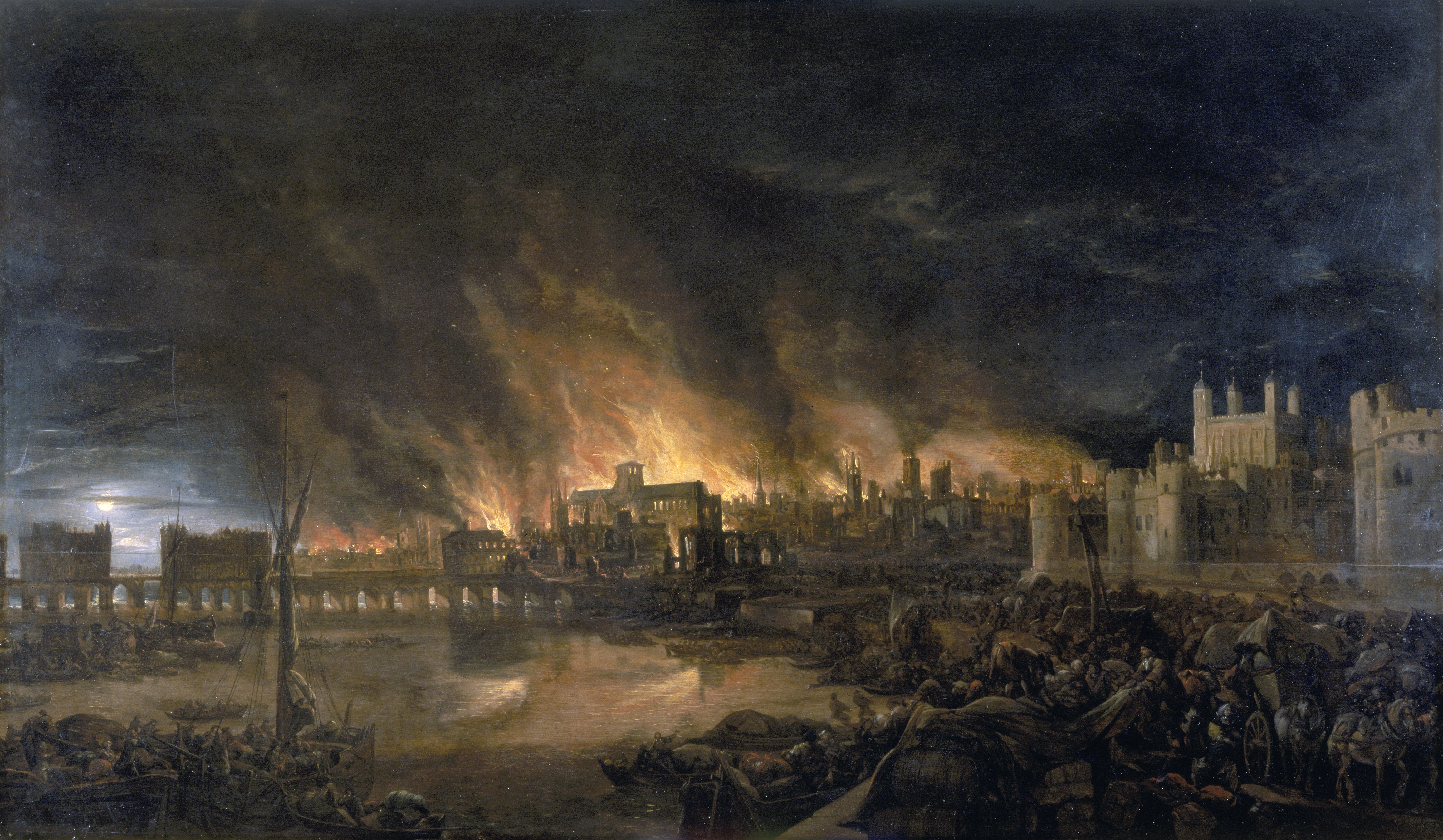
A fire in Thomas Farriner’s bakery on Pudding Lane became a citywide catastrophe in the early hours of 2 September 1666. Over the next several days, flames consumed much of the City of London, including thousands of houses and old St Paul’s Cathedral. The disaster forced people into streets, boats and fields with whatever possessions they could carry. It also exposed the limits of the city’s arrangements for firefighting and left a long argument about how London should be rebuilt. The bakery stood close to the Thames in a district filled with houses, workshops and stored goods. A dry summer had left timber vulnerable. Buildings crowded together, sometimes projecting over the narrow streets, while warehouses contained combustible materials used in trade and shipping. Fire was a familiar urban danger, but the conditions allowed this outbreak to move rapidly beyond a single property. An easterly wind drove the flames into the city rather than helping confine them near the waterfront. The exact ignition cannot be proved. Accounts place the beginning inside the bakery, but the familiar image of one carelessly abandoned spark goes beyond what can be established with certainty. Research has identified Farriner’s worker Thomas Dagger as a likely first witness. People in the house escaped through an upper window, while a maid died. The distinction between the known starting place and an uncertain immediate cause matters because later retellings often make both appear equally well documented. London had no modern professional fire brigade. Parishes maintained buckets, hooks and basic equipment, and people were expected to help. Pulling down buildings could create gaps in the path of a fire, but doing so meant destroying property deliberately and required timely decisions. The lord mayor, Thomas Bludworth, initially underestimated the danger. As the fire grew, delay became increasingly costly: a gap made too late could be overtaken before it became an effective barrier. Samuel Pepys observed the spread and recorded it in his diary. He carried news to the royal court and urged demolition ahead of the fire. His account is valuable both for the public crisis and for the practical anxieties of someone trying to save his own household. Other witnesses, including John Evelyn, described the destruction and confusion. Their writings offer particular viewpoints rather than an all-seeing record of what every Londoner experienced in each threatened street. People moved goods toward the river or out beyond the walls. Boats carried possessions away, carts became desperately valuable and streets filled with displaced households. The desire to save furniture, merchandise and documents could obstruct movement as well as preserve livelihoods. For many inhabitants, a house was also a workplace or shop. Losing it meant more than losing shelter. The destruction could remove the tools, stock and relationships through which an entire household earned its income. The flames reached old St Paul’s Cathedral, whose great stone structure did not make it immune. Timber fittings, nearby material and the building’s condition contributed to its vulnerability. Books stored there were also lost. The destruction of churches, halls and commercial institutions gave the disaster a civic as well as a domestic scale. The fire consumed a built record of earlier London, while scattered surviving structures and later archaeological deposits preserve fragments of that vanished urban landscape. Authorities eventually used more extensive demolition, including gunpowder, to establish breaks. Royal and naval resources became involved, and the weakening wind helped bring the fire under control. The main conflagration subsided by the middle of the week, although dangerous heat and smaller fires persisted. Institutional summaries differ slightly in how they express the end date. The starting day is secure; ending a disaster that leaves smouldering ruins is less neatly defined than extinguishing one isolated flame. About 13,200 houses and eighty-seven parish churches were destroyed. Around 100,000 people were left homeless in a city whose wider population extended well beyond the burned district. Very few deaths were formally recorded during the fire itself, but those figures do not fully measure suffering or the consequences of displacement. It is sensible to distinguish a small surviving recorded death count from a confident claim that almost nobody died in any part of the disaster and its aftermath. Fear also encouraged rumours of deliberate attack. Foreigners and Catholics became targets of suspicion in a society marked by religious and political conflict. Robert Hubert confessed to starting the fire and was executed, despite serious problems with his story. Later investigation treated the outbreak as accidental. The history of blame belongs alongside the physical spread of the flames: a population trying to explain catastrophe could attach certainty to accusations much more readily than the evidence justified. Reconstruction proposals included ambitious new street plans, but ownership, urgency and practical constraints largely preserved the old pattern. Building rules promoted brick and stone and addressed aspects of street layout. Christopher Wren’s new St Paul’s and rebuilt churches changed the skyline over the following decades. Fire insurance and organised private firefighting also developed. These changes were consequential, though they should not be compressed into a claim that one entirely new, uniformly planned London immediately replaced the burned city. The bakery stood in Pudding Lane, close to the river and the stored goods that helped the flames spread. The Monument stands nearby, commemorating the disaster, rather than on the precise ignition point. The distinction keeps the event attached to an ordinary working street instead of only to its later memorial. A bakery fire became a defining episode in London’s history because weather, buildings, stored materials and delayed decisions combined. The rebuilding left a city that remembered the flames in its skyline, regulations and institutions.
Event Date
September 2, 1666
Location
51.510120, -0.086022
Views
6

Comments

0
Be the first to comment!

More to explore

Locory

Tsujun Bridge: The Stone Aqueduct That Spouts Water

When Tsujun Bridge releases water, the stone arch seems to become a fountain. Jets burst from openings near its center and fall into the valley below. The spectacle is real, but…

Locory
Disaster Sites

Tacoma Narrows: The Bridge That Twisted Apart Four Months After Opening

The road was moving like a wave when Leonard Coatsworth abandoned his car on the Tacoma Narrows Bridge. On November 7, 1940, the suspension span began to twist so violently that…

Locory
Industrial Heritage / Strange Stories

Darvaza's Door to Hell

A glowing crater in Turkmenistan's Karakum Desert has become famous as the Door to Hell. Flames emerge from its floor, lighting a circular depression that looks especially…

Locory
Castles & Fortresses / Industrial Heritage / Music History

Red Sands: Wartime Sea Forts Became Pirate-Radio Studios

Seven rusting towers stand above the Thames Estuary on legs, like a small city placed in the sea. Red Sands was built to help defend wartime shipping and London from attack. Two…

Locory
Disaster Sites / Industrial Heritage

Lake Peigneur Drained Into a Salt Mine and Reversed a Canal

Lake Peigneur began November 20, 1980, as a shallow Louisiana lake. By the end of the disaster, water had poured into the salt mine beneath it, a drilling rig had disappeared,…

Locory
Cemetery / Historical / Pop Culture

Why Hugh Hefner Bought the Crypt Beside Marilyn Monroe at Westwood

Hugh Hefner’s crypt sits immediately beside Marilyn Monroe’s in the Corridor of Memories at Pierce Brothers Westwood Village Memorial Park in Los Angeles. The neighboring names…

Locory
Border Oddities / Historical / Local Community

Where the U.S.–Mexico Border Fence Enters the Pacific

At the western edge of the land border between the United States and Mexico, a steel fence crosses the beach and continues into the Pacific Ocean. On one side are San Diego’s…

Locory
Disappearances / Historical / True Mystery

Howland Island: The Landing Amelia Earhart Never Made

A small tower on Howland Island bears Amelia Earhart’s name, beside an expanse of open Pacific. The island was meant to be a refueling stop on her 1937 flight around the world.…

Locory
Local Community / Man Made Wonders (Architecture & Design) / Tunnels

Morgan’s Wonderland’s Boring Company Tunnel Aims to Connect an Inclusive Campus

A 900,000-pound machine arrived beside Morgan’s Wonderland in October 2026 with an unusual assignment: help connect an inclusive theme park to the wider network of services…

Locory
Historical / Wildlife

Marineland Antibes: Two Orcas Waiting After the Gates Closed

At Marineland Antibes, two orcas outlasted the attraction built around them. Wikie and her son Keijo had both been born at the French Riviera park: Wikie on June 1, 2001, and…

Locory
Historical / Wildlife

Harambe’s Death at Gorilla World: The Cincinnati Zoo Emergency

Harambe died at Cincinnati Zoo's Gorilla World on May 28, 2016, after a child entered the outdoor enclosure and fell into its moat. The zoo's Dangerous Animal Response Team shot…

Locory
Historical / Local Culture / Strange Stories

The Smoking Deaths Billboard: L.A.’s Unlikely New Year’s Countdown

On Santa Monica Boulevard in west Los Angeles, a rooftop billboard turns a national death toll into something a passerby can watch changing. Its electronic display estimates the…

Collection
2 places

Born at the Same Akron Hospital: LeBron James and Stephen Curry

LeBron James and Stephen Curry were born more than three years apart at the same Akron hospital. These two Locories follow their separate births at Akron City Hospital, now Summa…

Locory
Disappearances / Kidnappings / Serial Killers

Philadelphia's "House of Horrors" Is Now Linked to Seven Missing Women and a Massive FBI Search

A deteriorating brick house in Philadelphia’s Olney neighborhood has become the center of one of the city’s most disturbing ongoing investigations. The property at 417 W. Chew…

Locory
Buried Underground / Underground Spots

Farmers Digging a Well in China Accidentally Found an Entire Army Buried Underground

In March 1974, farmers digging a well near the village of Xiyang outside Xi’an, China, began pulling strange fragments of fired clay from the ground. At first, the pieces looked…

Locory
Attractions / Ruins

A Cargo Ship Wrecked Off North Sentinel Island and Left Its Crew Facing an Isolated and Aggressive Tribe

Just offshore from one of the most isolated inhabited islands on Earth sits the rusting remains of a cargo ship that has been stranded on a coral reef for more than four decades.…

Locory
Art / Graffiti / Installations / Man Made Wonders (Architecture & Design)

Prada Marfa, The Store That Sits Alone in the Texas Desert

Prada Marfa is a permanent art installation located beside U.S. Highway 90 in Presidio County, Texas, approximately 1.4 miles northwest of Valentine and about 26 miles northwest…

Locory
Bridges

Eight People Died After South Padre Island’s Only Bridge Suddenly Collapsed Into the Water

Shortly after 2 a.m. on September 15, 2001, a towboat pushing four heavily loaded barges slammed into the Queen Isabella Causeway between Port Isabel and South Padre Island,…

Locory
Tunnels

Tajikistan’s “Tunnel of Death” Included 3 Miles of Darkness, Floodwater and Toxic Exhaust

High in the mountains of Tajikistan, one of the country’s most important highways disappears directly into a five-kilometer hole beneath the Anzob Pass. Today it is officially…

Locory

Hidden in Rural Texas Is a Ranch Filled With Hundreds of Robotic Telescopes

In a remote stretch of central Texas, a collection of plain metal buildings sits in what looks like an ordinary rural field. During the day, there is little to suggest what is…

Locory
Internet Famous / Viral Spots

This Unusual Brooklyn Curiosity Shop is the location of Kelly Clarkson’s Viral Shopping Dispute

A brief shopping trip by Kelly Clarkson has suddenly made a small Brooklyn storefront one of the most talked-about shops in New York. The dispute began after Clarkson visited Art…

Locory
Disappearances

This Florida Lab Collected Millions From Medicare Genetic Tests, but Its Sudden Disappearance Raises Questions

A relatively obscure clinical laboratory operating from a small office complex in Deerfield Beach, Florida, became one of the most striking names in Medicare’s rapidly expanding…

Locory
True Crime

This Small Florida Lab Became Medicare’s Biggest Biller for a $2,400 Epilepsy Genetic Test, Now is Shutdown

Inside an ordinary two-story office complex in Deerfield Beach, Florida, a clinical laboratory that barely existed a few years earlier became one of the most remarkable names in…

Locory
Attractions

A Rodent Left An Imprint in a Chicago Sidewalk, Then It Became a Tourist Attraction

For decades, people walking along West Roscoe Street in Chicago passed an oddly shaped depression in the sidewalk without giving it much thought. The imprint looked remarkably…

Locory

Fatal Incident on Goliath Prompts Closure at Six Flags Over Georgia

A trip to Six Flags Over Georgia turned deadly Monday afternoon when a man died during an incident involving Goliath, the park's towering 200-foot roller coaster. Several other…

Locory
Murders

A Missile Struck Riyadh’s Main Airport, Killing 13 and Wounding More Than 300

One of the busiest airports in the Middle East became the scene of a deadly missile attack on October 10, 2026, when a strike hit King Khalid International Airport in Riyadh,…

Locory

Riyadh Airport Was Hit Again as a Projectile Struck Terminal 4 and Set It on Fire

Less than 24 hours after a devastating attack killed 13 people at Riyadh's main airport, King Khalid International Airport was struck again. This time, Saudi authorities…

Locory

New York City’s Tiniest Property Exists Because One Family Refused to Give the City 500 Square Inches, The Hess Triangle

In one of the most expensive real estate markets on Earth, there is a piece of New York property so small that a single person can stand on almost all of it at once. The Hess…

Locory

Only One Piece of This Mineral Has Ever Been Found, and It Came From This Valley in Myanmar

Diamonds may be expensive and painite was once famous for being nearly impossible to find, but neither holds the same distinction as kyawthuite. Only one confirmed natural…

Locory
Bridges

This Foot Bridge Lets You Walk From California Straight Into a Mexican Airport

At the southern edge of San Diego, there is a building where travelers can park their cars in California, carry their luggage inside, walk down a hallway, cross an international…

Share
S
Locory name
Location details
Link to share
Link copied to clipboard
Report Locory
Locory

Discover, share, and explore community-driven points of interest with Locory.

Follow Us

About Contact Documentation Collaboration Upcoming Privacy Policy Terms of Service Accessibility Mailing List Wiki