What Is a Locory?
Explore real-world locations and discover the history, events, and moments tied to them.
Locory turns a map into a collection of lived experiences. A locory can be a landmark, a neighborhood corner, a venue, a trail, or any other place that matters because something happened there.
A locory does not need to be a permanent object, attraction, or standing feature. It can also be a place where a notable event, memory, gathering, or historical moment happened in the past.
The goal is simple: help people find meaningful places and understand why those places matter.
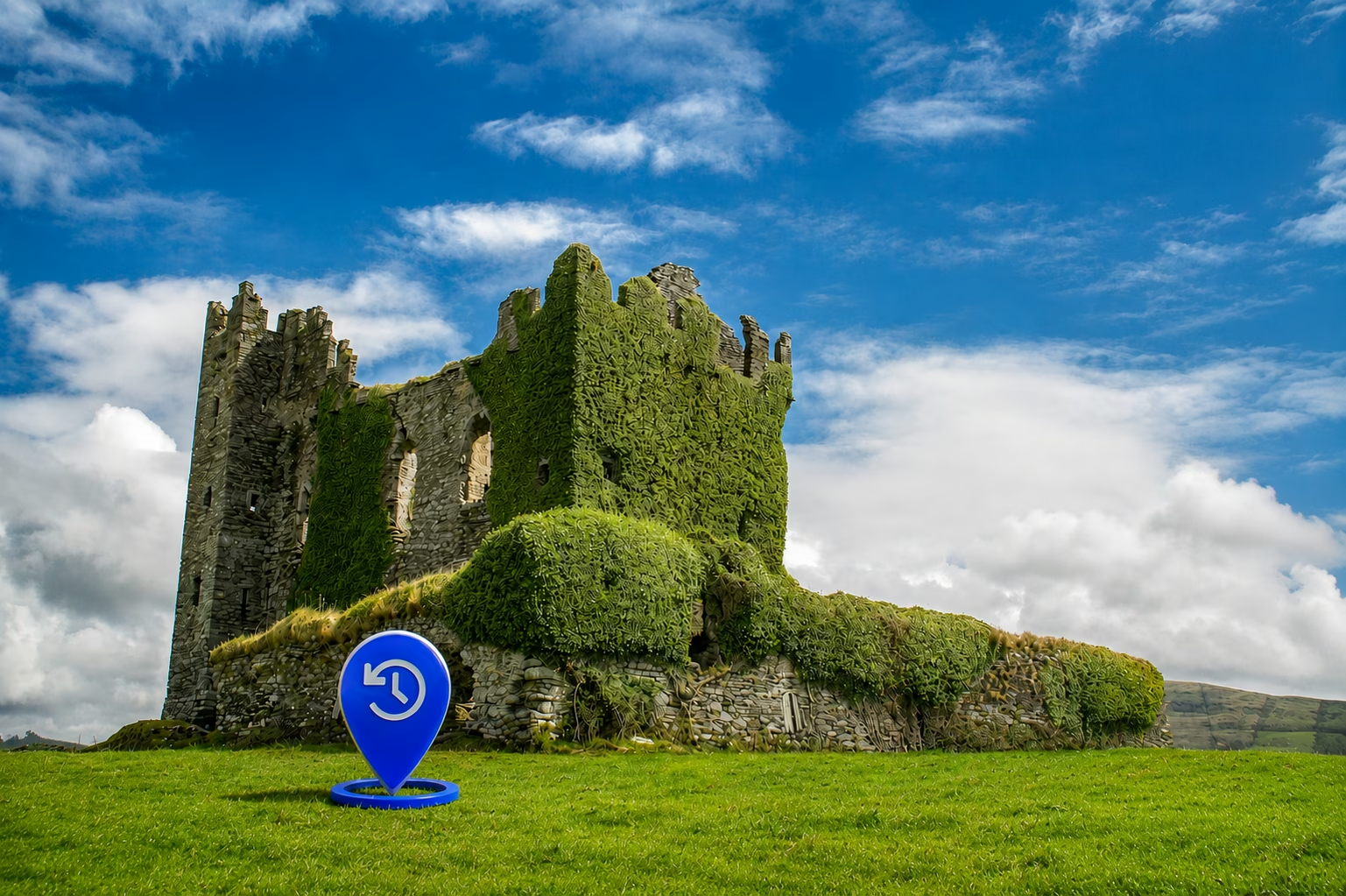
What makes a place a locory?
- It has context beyond a pin on a map.
- It connects to history, memory, culture, or a specific event.
- It may represent a location where something important previously happened, even if there is no permanent marker or structure there now.
- It gives people a reason to stop, learn, and explore further.
Examples of good locories
- A downtown theater where a major civil rights speech, protest, or community organizing event took place, with a short explanation of what happened there and why it still matters.
- A bridge overlook, train station, or neighborhood corner known for a specific historical event, local tradition, or widely remembered moment tied to that exact place.
Examples that would not be accepted
- A random business or house with no story, history, event, or meaningful context attached to it.
- A submission that only says something vague like “cool place” or “I like coming here” without explaining what makes the location notable.
- A made-up, misleading, or unverifiable story attached to a place just to get it on the map.
How Locory uses that idea
Locory helps surface those stories through community contributions, curated places, and map-based discovery so each location can be understood as more than just coordinates.